Val Barros
Brésil
Current edition -
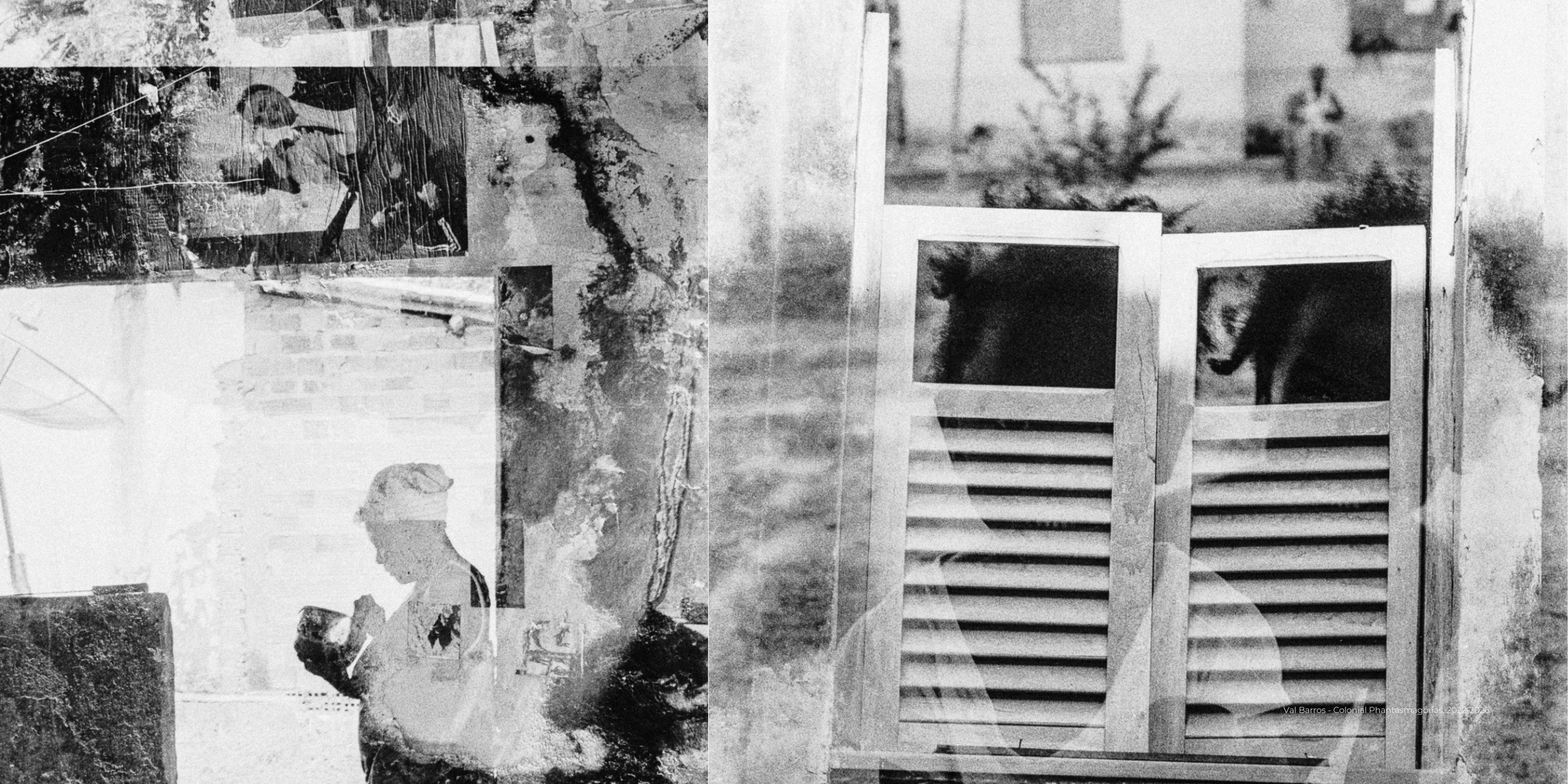
Colonial Phantasmagorias
I am the daughter of retirantes — my mother from Piauí, my father from Ceará — who fled drought and migrated to Maranhão, in Brazil’s Northeast. Environmental crisis was the first force of displacement in my family, long before I crossed an ocean. I descend from a lineage of women shaped by forced movement and dispossession: drought migrants, land workers, quebradeiras de coco babaçu.
Fantasmagorias coloniais was born of an accident. A roll of film exposed twice, by mistake, in São Luís do Maranhão — a region built on the labour of enslaved Africans, and home today to one of Brazil’s largest concentrations of quilombola communities. The camera superimposed the colonial centre onto the quilombola communities of the Baixada Maranhense, where I spent part of my childhood: the plantation house falling over the Black body, wrought iron over the child. I did not correct the accident. It told the truth — the colonial is not past; it returns, and it bears a recent date. Under a far-right government, these communities were threatened with expulsion from their own land.
Displacement, in my work, is not metaphor. It is inheritance. These images hold what resists when a people is pushed from its ground — and what remains.